Burst Pipe Repair in Fernwood, Spartanburg, SC

Burst pipe repair in Fernwood, Spartanburg, SC

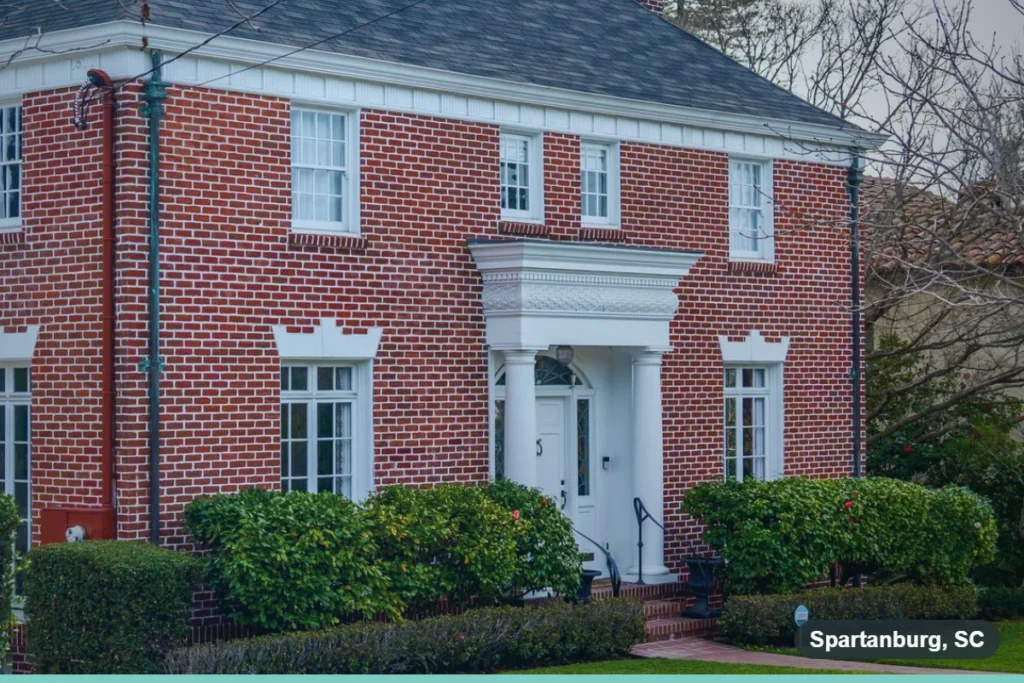
Fernwood is generally described as one of Spartanburg’s early modern suburbs, developed through the 1950s and 1960s, with brick ranches and two storey traditionals making up most of the housing. Homes recorded on Fernwood Drive include examples built in 1957.

If that is right, it puts most of the original plumbing here somewhere around seventy years old. Seventy is an interesting age for a water pipe. It is well past the point where the material is new, and it is also the age at which the failures become predictable rather than random.

Why seventy year old copper starts to go

Houses of this era were generally plumbed in copper, which replaced galvanized steel as the standard supply material through the 1950s. Copper is a good pipe and it lasts a long time, which is why it is still in service in these houses at all. But it does not last forever, and the way it fails is specific.

Pinhole leaks. Over decades, water chemistry and flow velocity gradually erode the inside wall of the pipe, usually worst at bends and at points where the flow is turbulent. The result is a small hole rather than a dramatic split, and a small hole under constant pressure does a surprising amount of damage before anybody notices. One pinhole in a seventy year old copper system is often the first of several, because the whole run has had the same seventy years.

Freeze splits. Copper has no give. Where a run passes through an exterior wall, an unheated garage or an attic, a hard freeze splits it cleanly. These are usually a single section replacement rather than a system problem, provided the cause gets dealt with at the same time.

Failures at later transitions. Seventy years means renovations, and renovations mean CPVC or PEX joined to the original copper. Every junction between two materials is a candidate for failure.

The practical question on a Fernwood call is usually whether you are looking at one failure or the first of many. That depends on the condition of the whole run rather than the state of the one spot that leaked, and it gets assessed rather than assumed. See burst pipe replacement for how that decision is made.

Aerial view of a South Carolina neighborhood with homes and trees, burst pipe repair near Spartanburg SC

Early slab construction, and the hidden leak

The 1950s and 1960s are when slab on grade construction became common in American suburbs, replacing the crawlspaces of the older neighbourhoods nearer the centre of town. That single difference changes everything about how a burst behaves.

Water from a failed line under a slab has nowhere to drain. It saturates the ground beneath the concrete and migrates to the edges, which produces a particular set of signs: a warm or hot patch on the floor where a hot water line is leaking and the heat conducts up through the slab, damp appearing around the perimeter of a room, a carpet edge that stays wet, or a baseboard going dark with no plumbing anywhere near it. No puddle, nothing dramatic, and that is precisely why slab leaks run for weeks.

Finding one accurately comes before any decision about opening concrete. A meter test confirms there is an active leak, closing the valve at the water heater separates hot from cold and often explains a warm floor immediately, acoustic listening narrows it to a point through the slab, and moisture mapping shows where the water has spread as opposed to where it escaped. Those two are rarely the same place, which is why opening the floor where the damp appears is usually the wrong move. See burst pipe leak detection.

Where a Fernwood house freezes

No crawlspace does not mean no freeze risk. In a brick ranch the exposed places are the exterior walls, especially a north facing one, an unheated garage where the water heater and washer connections often sit, any run in an attic space above an addition, and the pipe behind an outdoor tap.

That last one deserves its own mention, because it is the most common freeze call there is and the most commonly misread. The visible hose bib looks perfectly fine. The split is a foot inside the wall behind it, so the water turns up indoors and nobody connects it to the tap outside.

Spartanburg Water advises letting faucets drip ahead of winter weather, since moving water resists freezing far better than still water, and the utility has said publicly that it does expect some pipes to burst during freeze events. Taking garden hoses off outdoor taps in autumn is the other step worth doing, because a connected hose holds water against the bib and gives the freeze somewhere to start. See frozen burst pipe repair.

Technician in blue repairing equipment indoors, pipe repair in Fernwood Spartanburg SC

Services available in this area

For homes

Single storey brick ranches are relatively straightforward to work on above the floor and completely inaccessible below it, which shapes the approach. Short, direct runs are easy to trace. Anything buried in the slab has to be found by instrument.

Useful things to have ready: whether your floor is concrete throughout, what the pipe looks like under a sink, whether the house has had a bathroom or kitchen reworked and roughly when, and where the main shutoff is. In slab housing the shutoff is commonly at a meter box near the street or where the supply enters the building rather than anywhere inside.

Traditional red brick home with a garden, home burst pipe repair in Fernwood Spartanburg SC
Restaurant interior with wooden decor, business burst pipe repair in Fernwood Spartanburg SC

For businesses

For commercial premises nearby, the limiting factor is normally when the water can be off. A building with zone valves can keep most of itself in service while a section is dealt with. A building without them needs the work planned around hours you can afford to be dry. Tell us what the building does and what sits under or beside the affected area.

Common problems in this area

  • Copper pinhole leaks. Decades of internal erosion, often the first of several in the same run.
  • Slab leaks. Warm flooring or perimeter damp, located before concrete is opened.
  • Freeze splits behind outdoor taps. Visible fitting intact, break inside the wall.
  • Garage and exterior wall freezes. Water heater and washer connections in unheated space.
  • Failures where a renovation joined new pipe to old. Transitions are a recurring weak point.

Signs you need this service

  • A warm or hot patch on a concrete floor with no underfloor heating.
  • Damp at the edge of a room, or a baseboard darkening where no pipe runs.
  • A small persistent damp patch on a ceiling or wall, which often means a pinhole rather than a split.
  • Running water audible with everything closed.
  • A water meter that moves when nothing is in use.

How a call works

  1. Call and describe it. What you have noticed, when it started, and the pipe material if you know it.
  2. Water off, or left on. Off at the main for a visible burst. Often left on for a hidden leak, because detection depends on pressure.
  3. Find the leak. Meter test, hot and cold isolation, acoustic listening, moisture mapping.
  4. Fix and check the flow. Section replaced or rerouted, new run insulated where it passes through unheated space, pressure returned gradually and watched.

Knowing your area

Brick ranches and two storey traditionals give Fernwood a consistent character, and consistency is genuinely useful for this trade. A neighbourhood built across a narrow window tends to share a plumbing profile, which means the likely materials, the likely routing and the likely failure points can be anticipated before anyone arrives rather than discovered on the day.

What it also means is that houses here tend to reach the same point in a pipe’s life at roughly the same time. A run of pinhole leaks across a street of similar age houses is not a coincidence, and it is worth knowing that a neighbour’s experience may genuinely predict your own.

One thing worth checking first

If the water is surfacing in the street, in a verge, or at the meter box rather than inside the house, it is usually on the utility’s side of the meter and not your responsibility. Spartanburg Water takes reports of water line breaks on 864-582-6375, and one call can save you a visit you do not need.

Common questions

Yes. Fernwood is one of the Spartanburg areas covered. Calls for burst pipe repair, Fernwood Spartanburg SC, are taken at any hour, day or night.

A small hole worn through the wall of a copper pipe from the inside over many years, rather than a split. It leaks slowly and constantly, which does more cumulative damage than a dramatic burst because nobody interrupts it. In an older copper system, one pinhole is often the first of several.

Not automatically. Plenty of copper from that period is still perfectly serviceable. The assessment looks at the condition of the run rather than its age alone. Where pinholes have started appearing in more than one place, replacing the run becomes the sensible answer, and you get the reasoning before any decision.

Usually a hot water line leaking beneath the slab, with heat conducting up through the concrete. It tends to appear before any damp does, so it is an early warning worth acting on.

Yes. Exterior walls, an unheated garage, an attic run above an addition, and the pipe behind an outdoor tap are all exposed. The hose bib one is the most common and the most often misread, because the split sits inside the wall while the visible fitting looks fine.

Call now

For burst pipe repair, Fernwood Spartanburg SC, shut the water off, then call.